Museum of Contemporary Art
Antwerp, Belgium
Competition
Feilden Fowles were invited by the Flemish government to participate in a design competition for the Museum of Contemporary Art Antwerp (M HKA). The current location of M HKA, inside a former grain storage facility, was assessed as falling short of museum standards and that a new purpose-built gallery was necessary to secure the museum’s future. Our proposal for the new gallery took a low-tech, low-carbon and low-maintenance approach to the design, re-imagining links between art and ecology; exploring ways in which this could bring a pervasive publicness to the museum, making it truly part of the city.


Antwerp port site
The proposed site for the new Museum of Contemporary Art in Antwerp sits within a city shaped by centuries of maritime commerce and urban life. Port of Antwerp has been a pivotal European harbour since the 19th century, evolving into one of the continent’s largest trade gateways on the Scheldt River estuary and a global logistics hub. Historically, the docklands hosted grain storage, dry docks and industrial activity that defined the city’s economy. The museum site, near remnants of a historic lock and former grain yards, links this heritage with contemporary cultural ambition. Multiple entrances activate surrounding streets, while public gardens connect the museum vertically, integrating heritage, ecology and urban life into a cohesive civic presence.
-
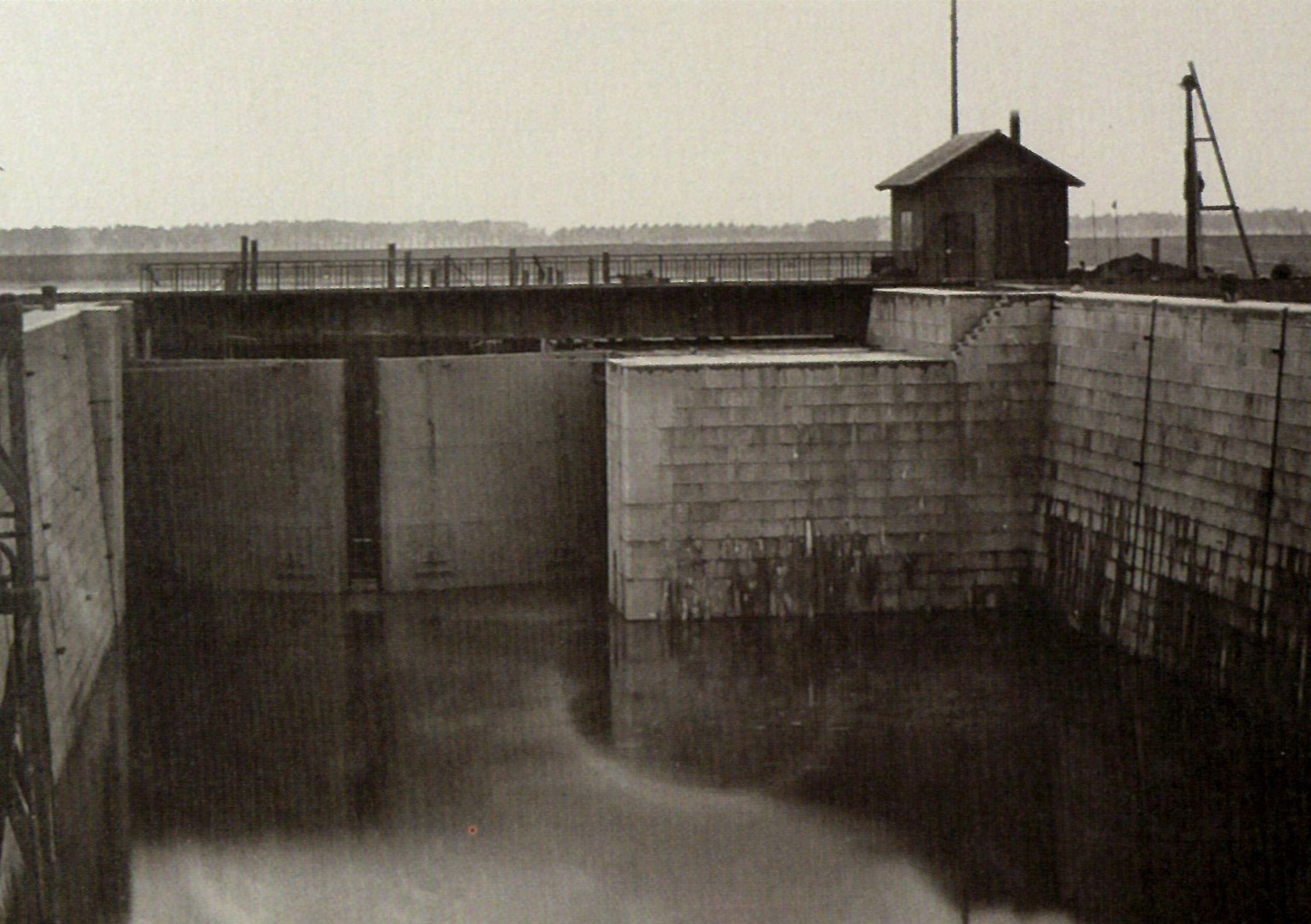 Lock at the Port of Antwerp, 1885

Design Concept
The design consists of a public base and an exhibition tower. A series of highly legible garden spaces are distributed from the street up to the top of the building, and are accessible to any general public wanting to visit. These gardens weave a publicness throughout. A series of break-out rooms from this public spine offer third-spaces to the city, and serve to punctuate the visitor’s experience and alleviate museum fatigue.
-
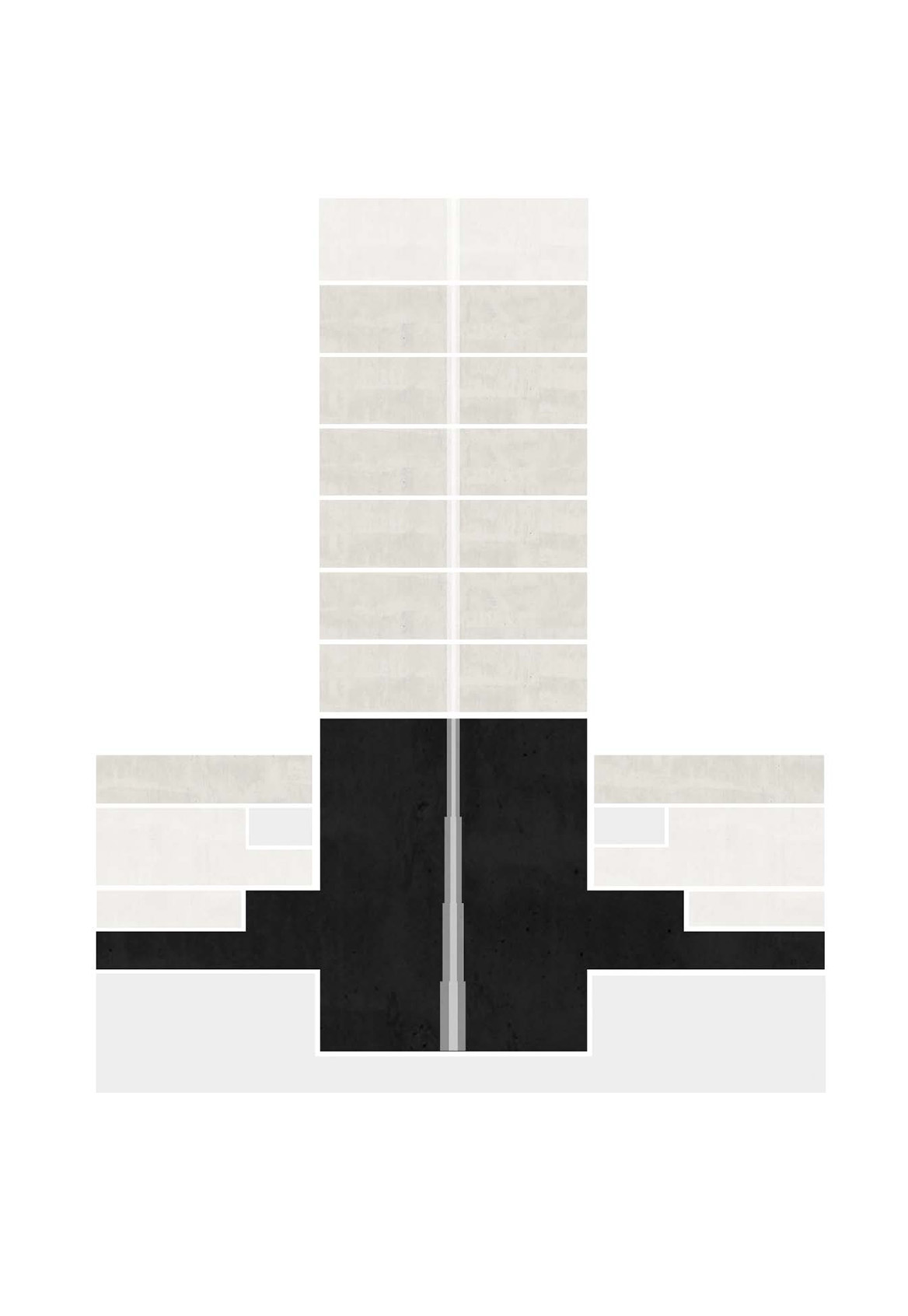 Conceptual section

-
 Dock water line
 -
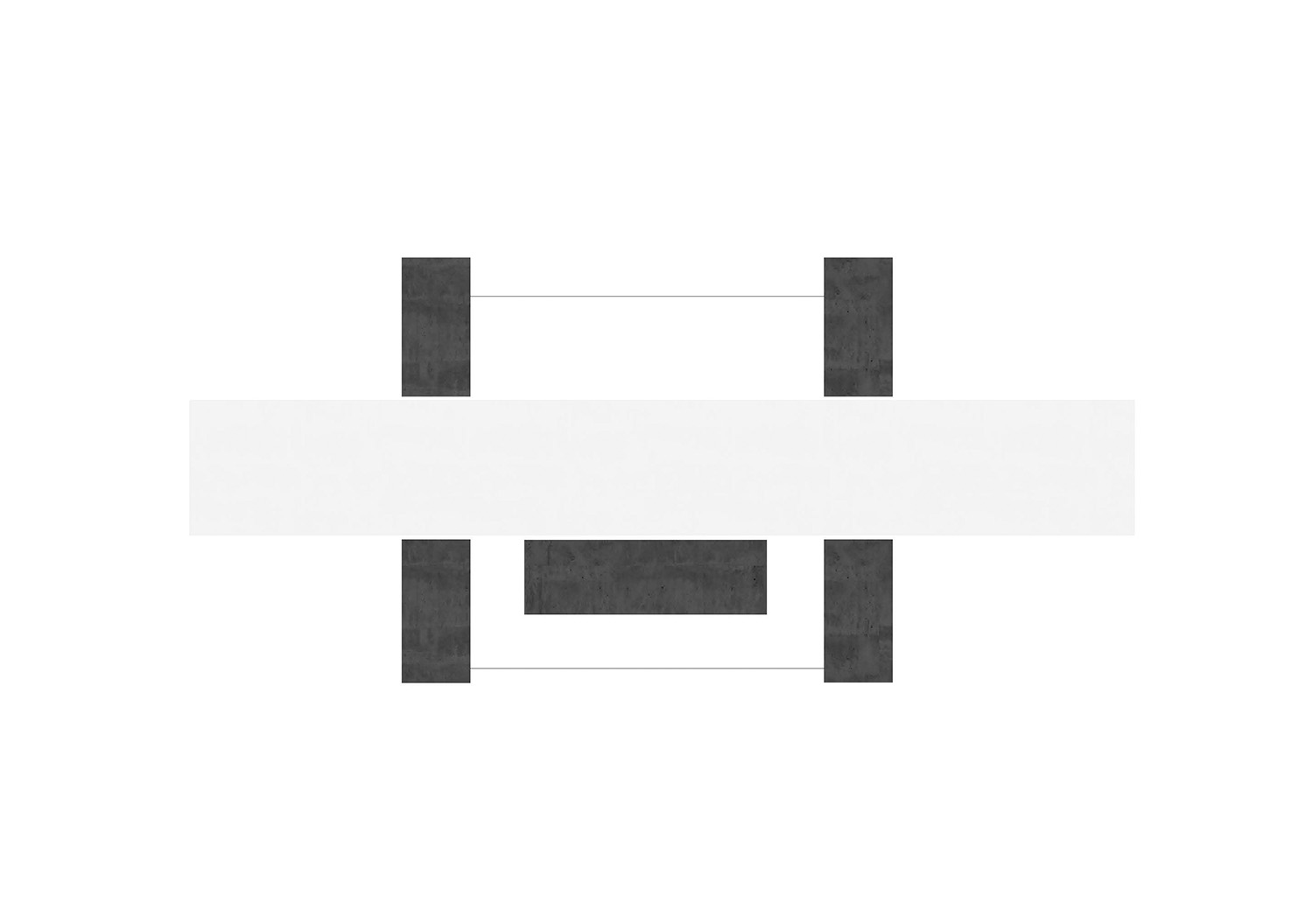 Basement level plan
 -
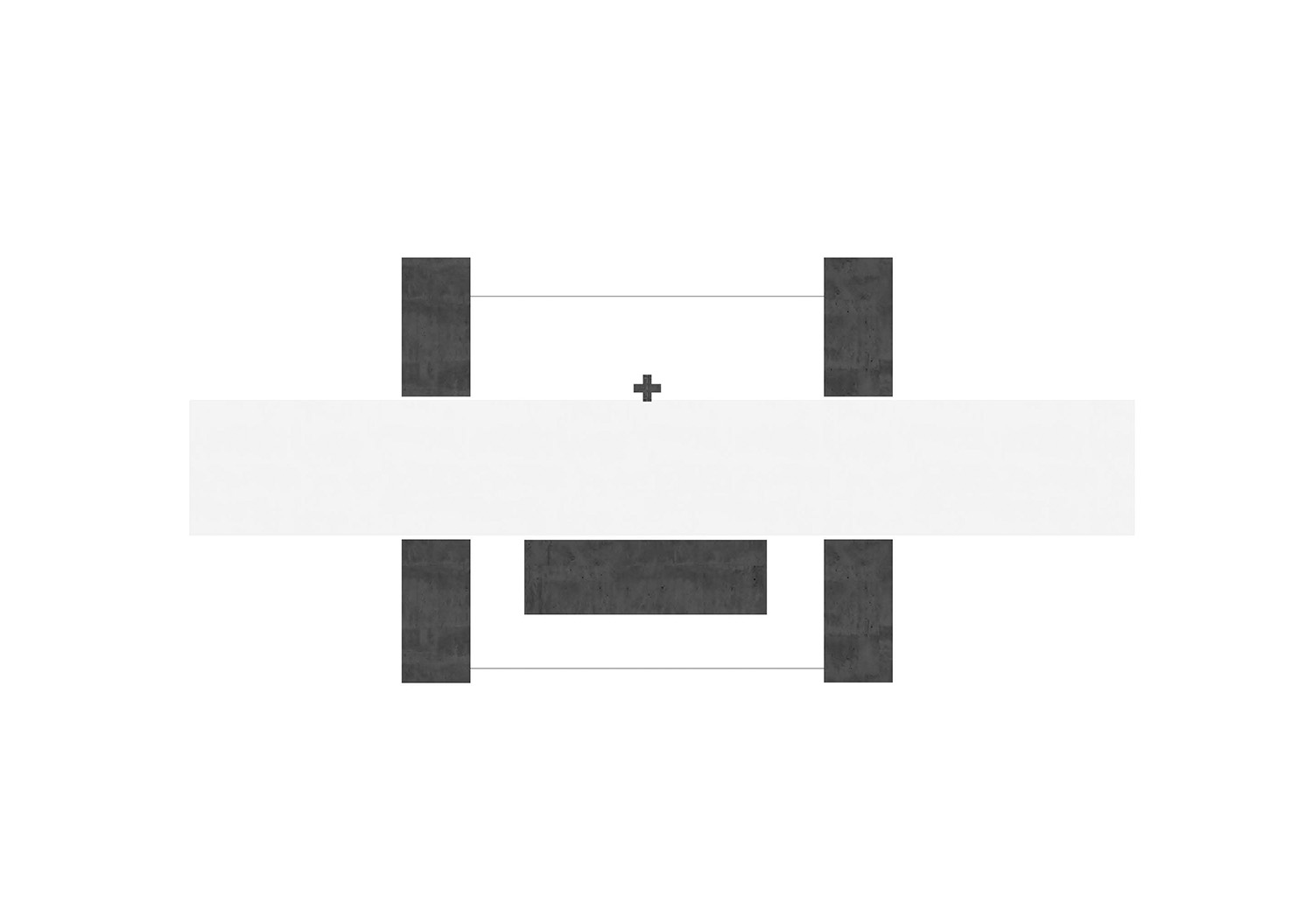 Basement level plan
 -
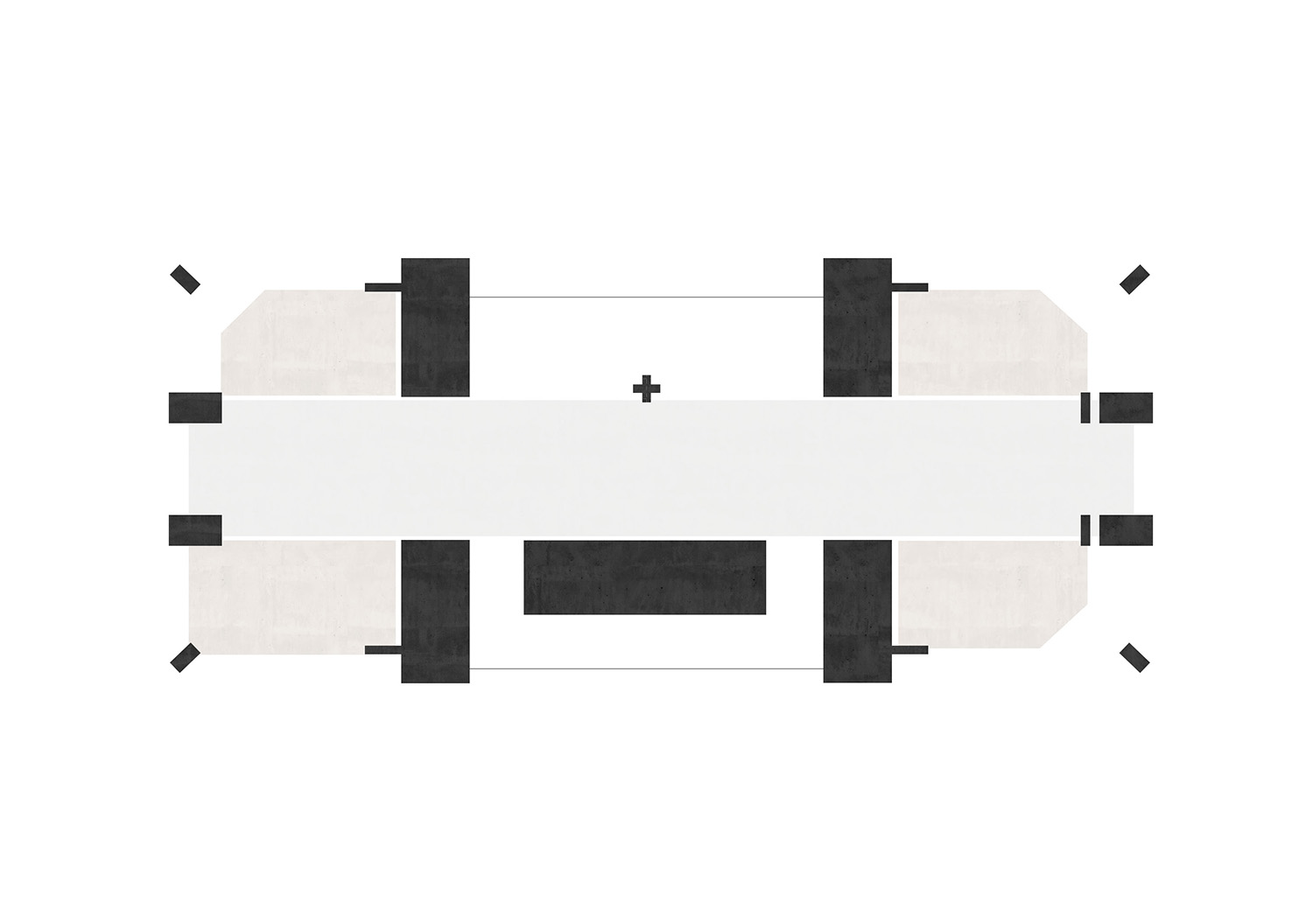 Ground floor plan


Exhibition Spaces
Exhibition spaces are structured around a single, hard-working column that pierces through every floor, acting as a wayfinding landmark and expressing a certain structural idea. Each floor has its own character and atmosphere. All galleries are naturally lit, through a combination of diffuse north light, light that is filtered through the gardens, and occasional, carefully controlled, moments of direct light.

Plaza and Street
The base can be entered from several sides at the ground floor, thereby blurring the boundaries between the institution and the city. It consists of a large hall that reaches into the basement, where the remnants of the old lock which still exists on this site are exposed. From there, the central column rises through the building. The large hall is animated by a café, a restaurant, a shop, a large auditorium, seating areas and spills out into the park and the streets around the museum.
-
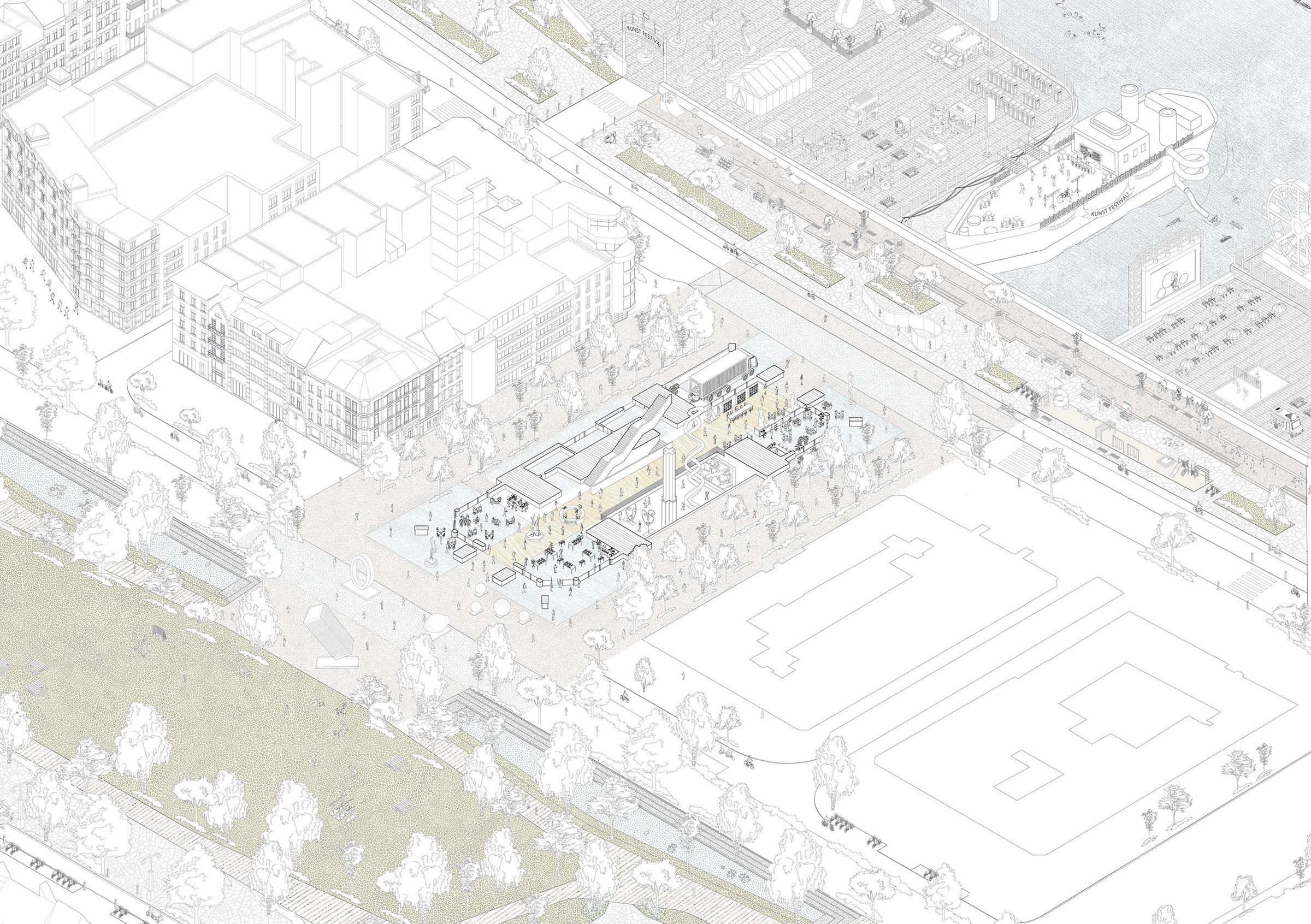 Axonometric view of the proposed plaza

-
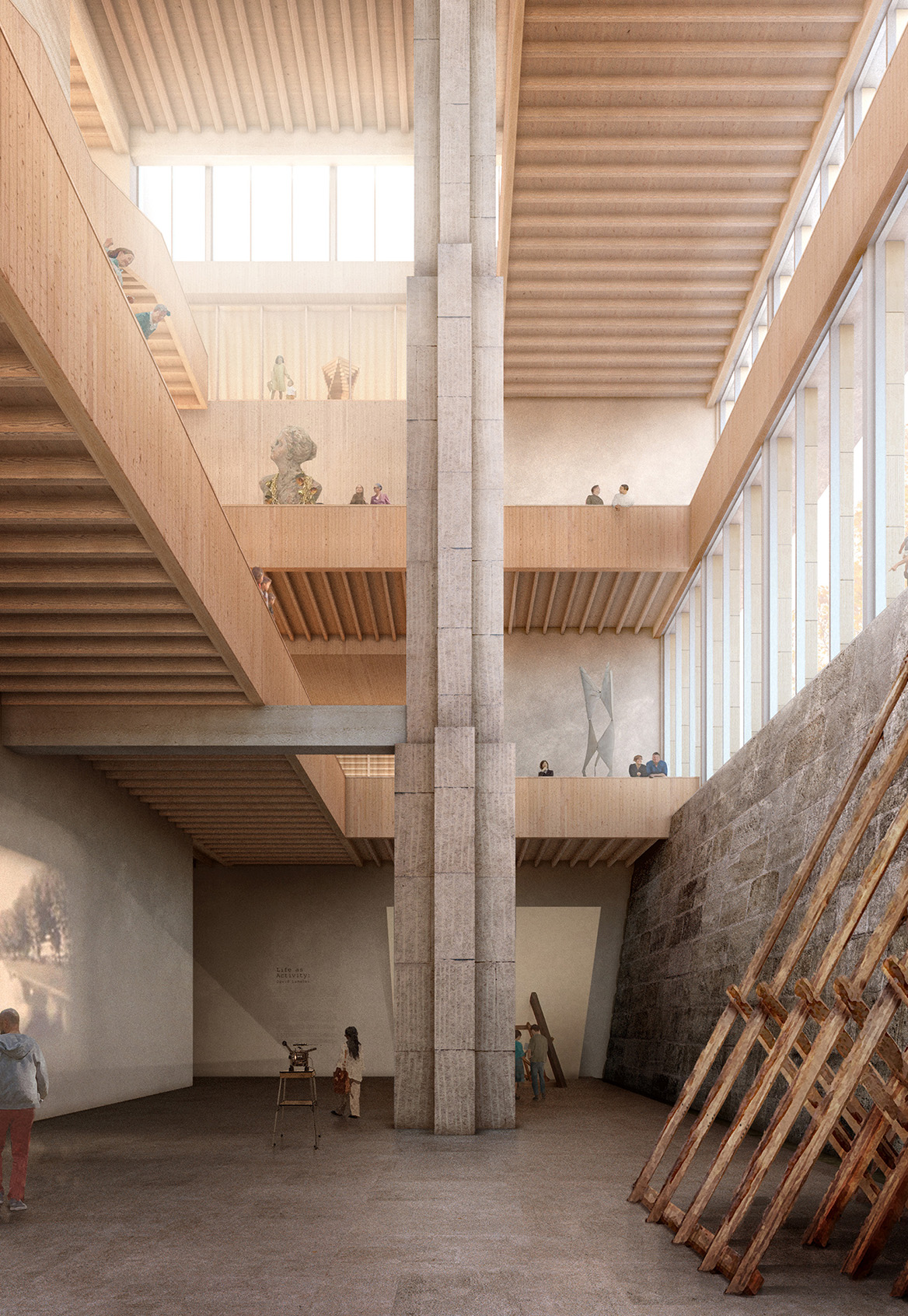 View from the basement

-
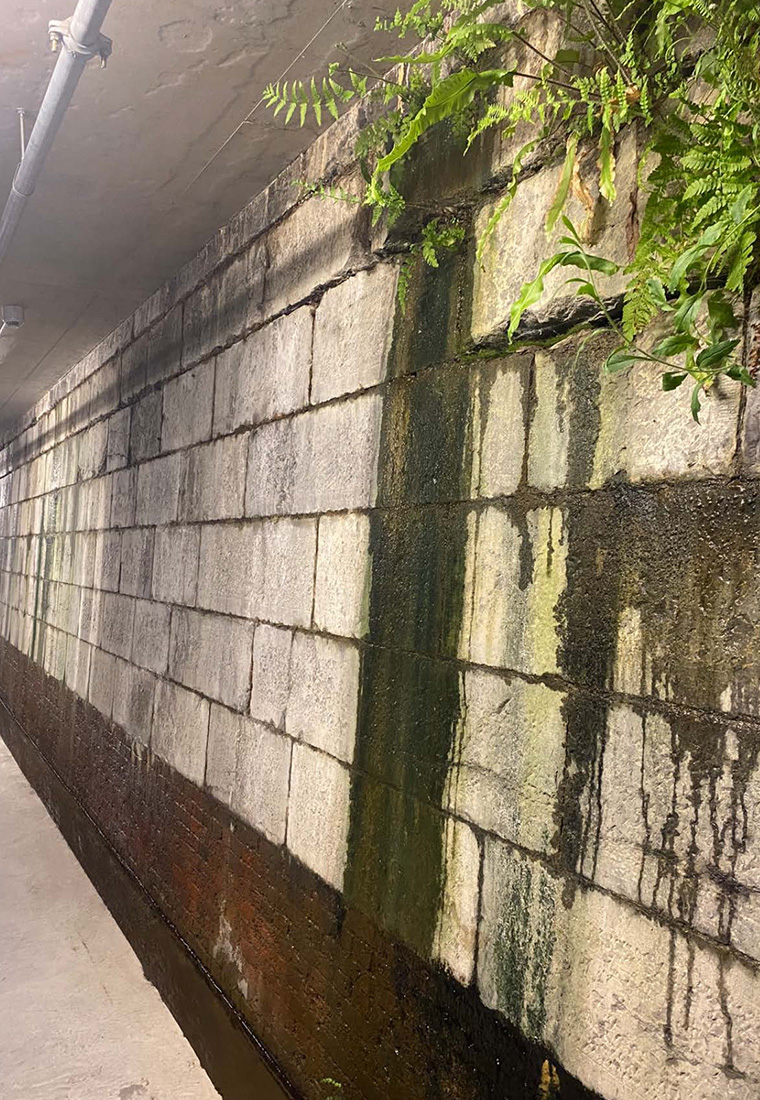 Existing tiled wall at the Port of Antwerp

Sustainability
The project prioritises low carbon materials including natural stone, wood, and lime-calcinated clay concrete, while also considering plant life as an integral element. The material palette balances heritage, sustainability, and ecological innovation – paying tribute to the past while shaping a sustainable future.
-
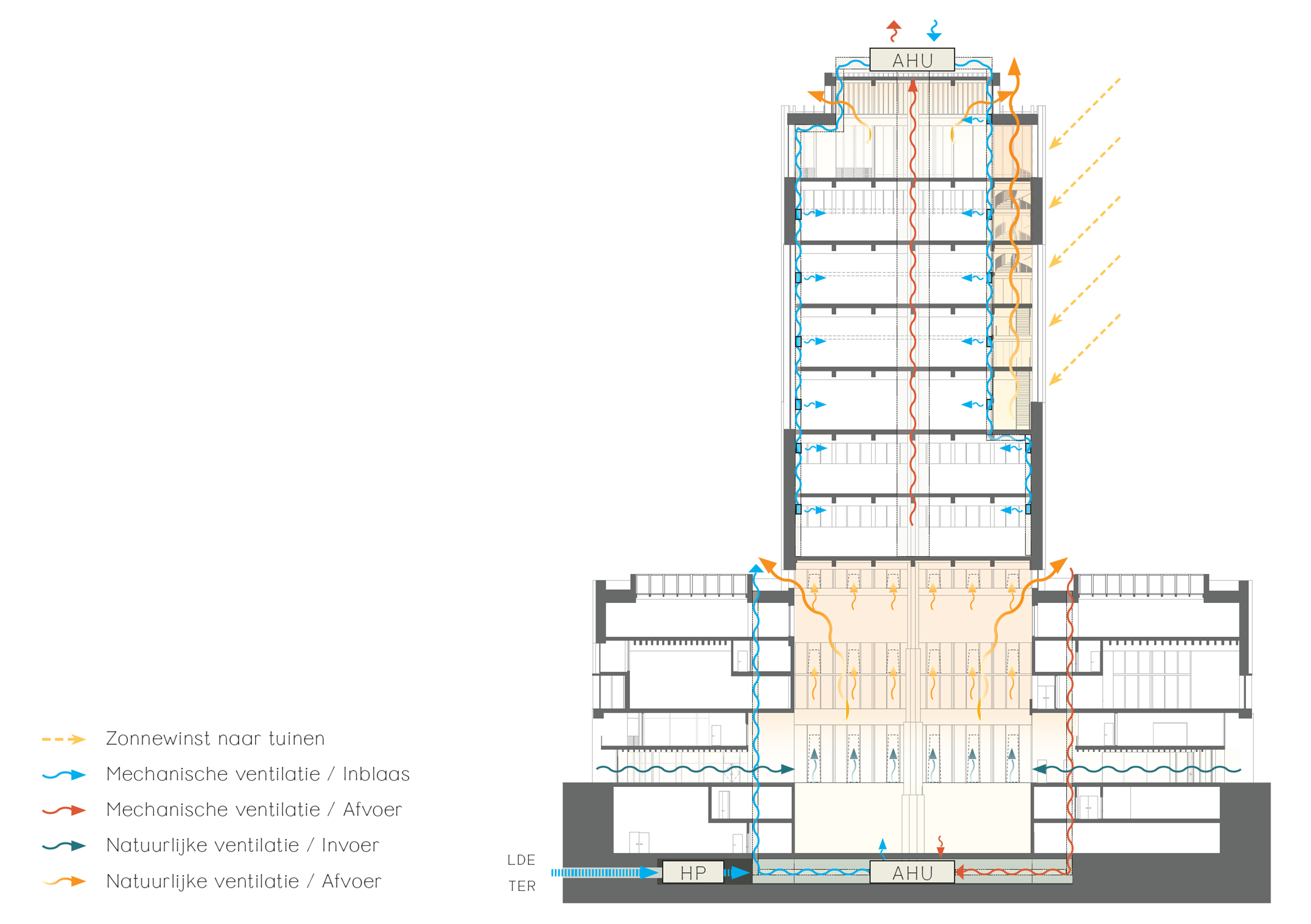 Section of ventilation, heating, and environmental systems
 -
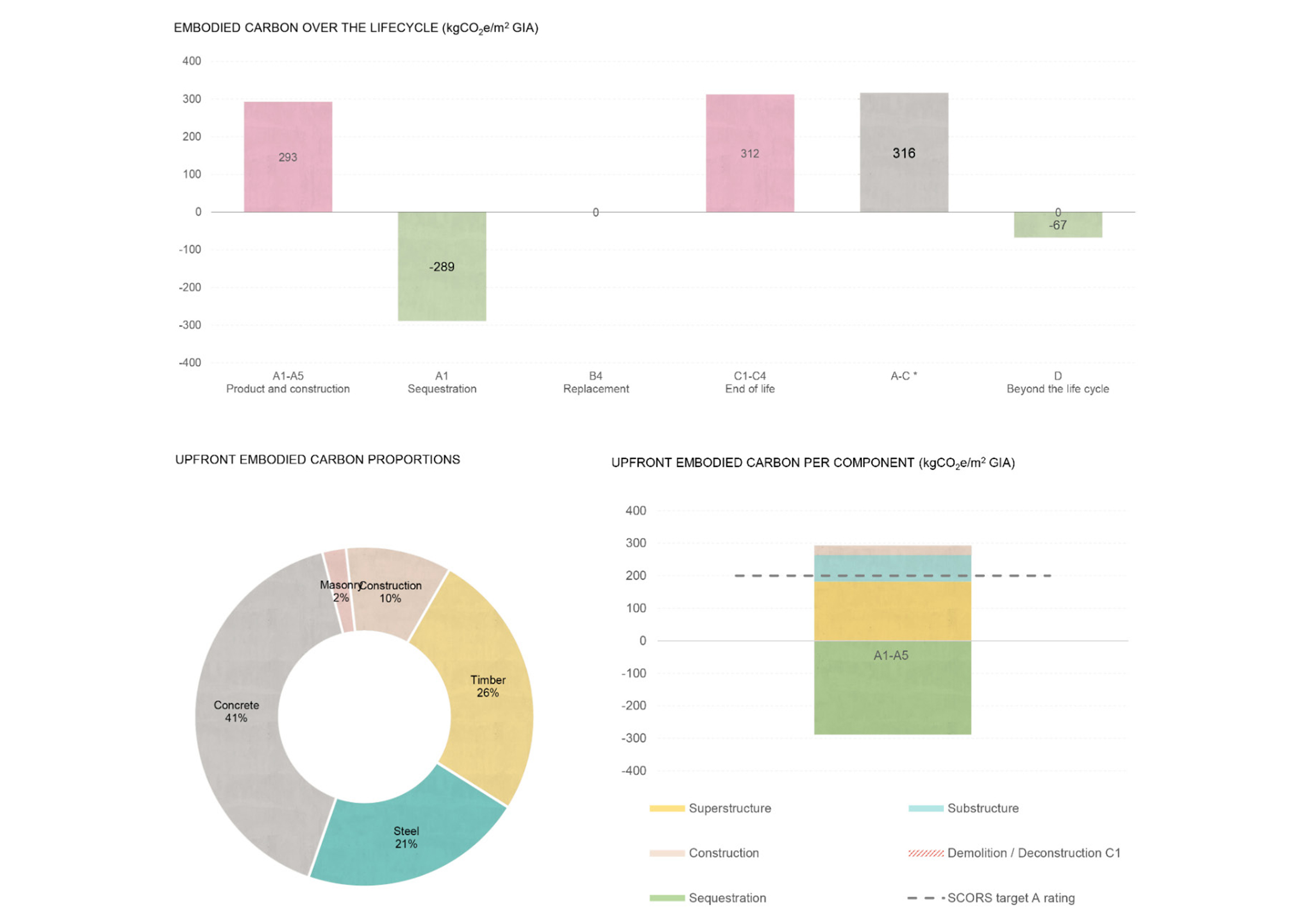 Embodied carbon analysis


Tectonics and Materiality
The building’s structure combines a robust core with stone columns, precast frames and timber slabs, forming a clear tectonic system. The central core anchors vertical circulation and wayfinding, while stone columns define public and social spaces. Precast concrete frames provide modular efficiency, though their standardisation limits subtle spatial variation. Timber slabs introduce warmth and natural materiality, requiring careful detailing for durability. The design adopts a low-tech, low-carbon approach, prioritising sustainably sourced timber, natural stone and lime-calcined clay concrete. Materials are expressed honestly to reveal construction logic and ecological intent. Together, these elements create a structural narrative balancing practicality, sustainability and a civic, human-centred architectural experience.
-
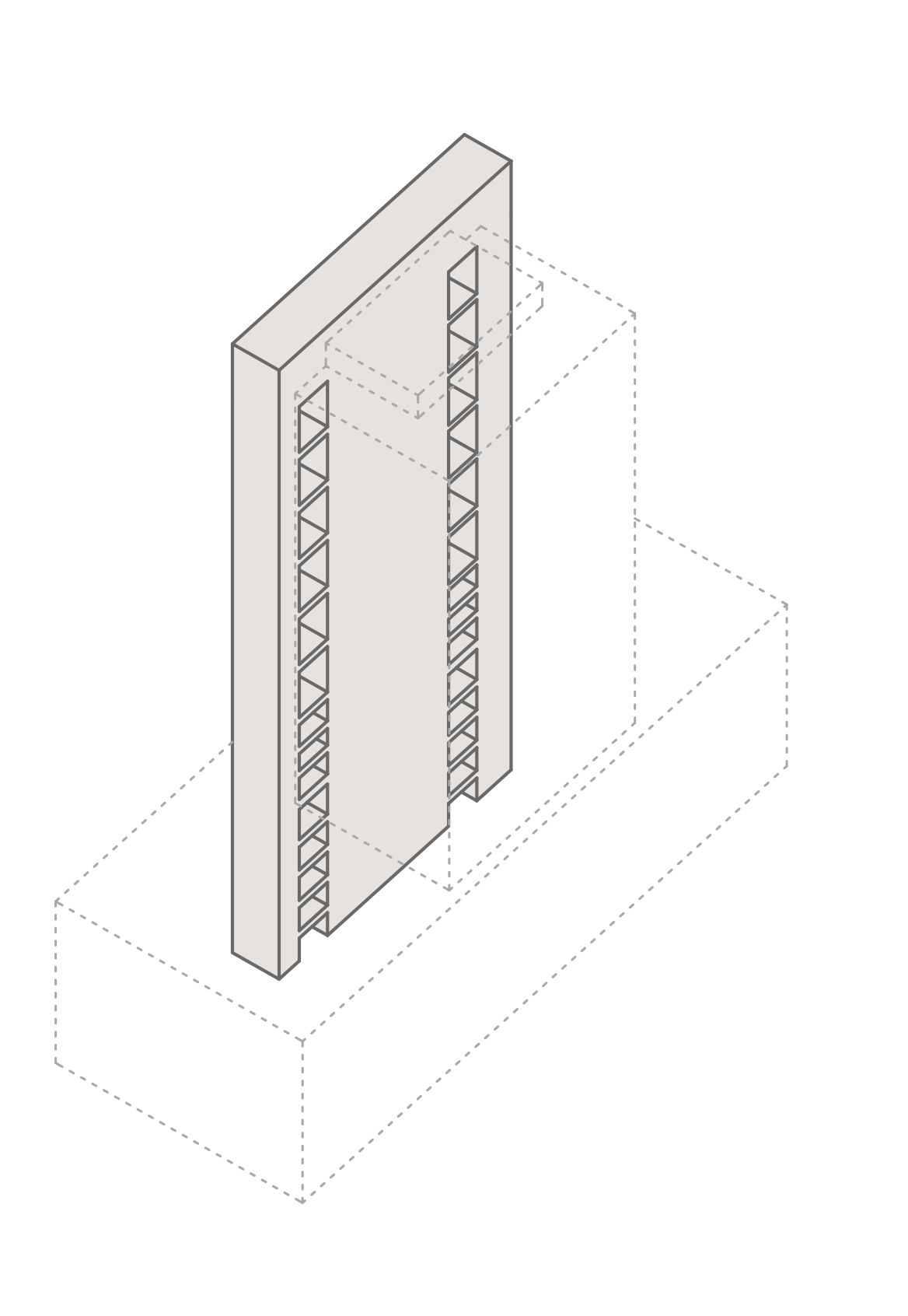 Construction Stages of the Building: Stage 1 - Core
 -
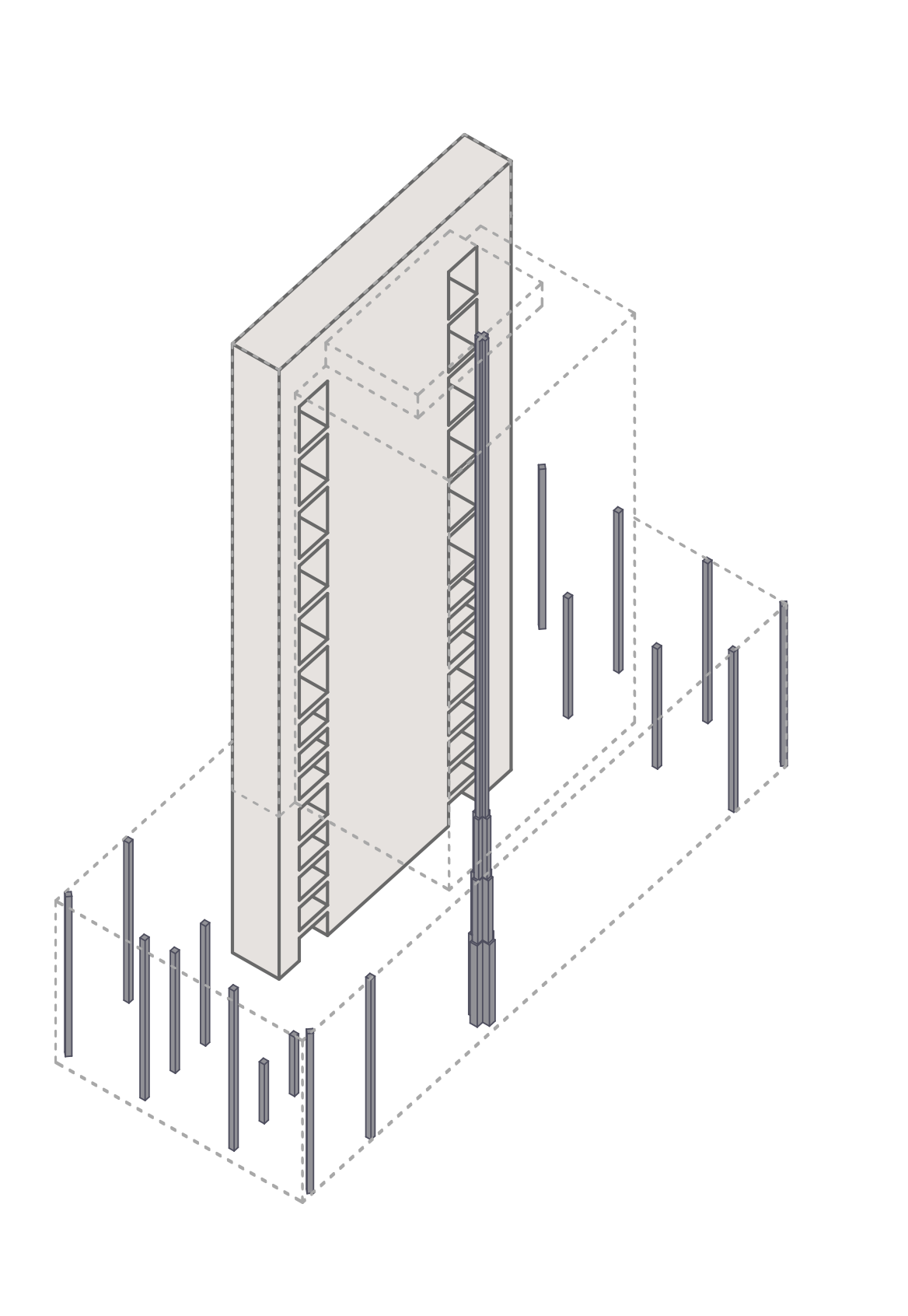 Construction Stages of the Building: Stage 2 - Stone column
 -
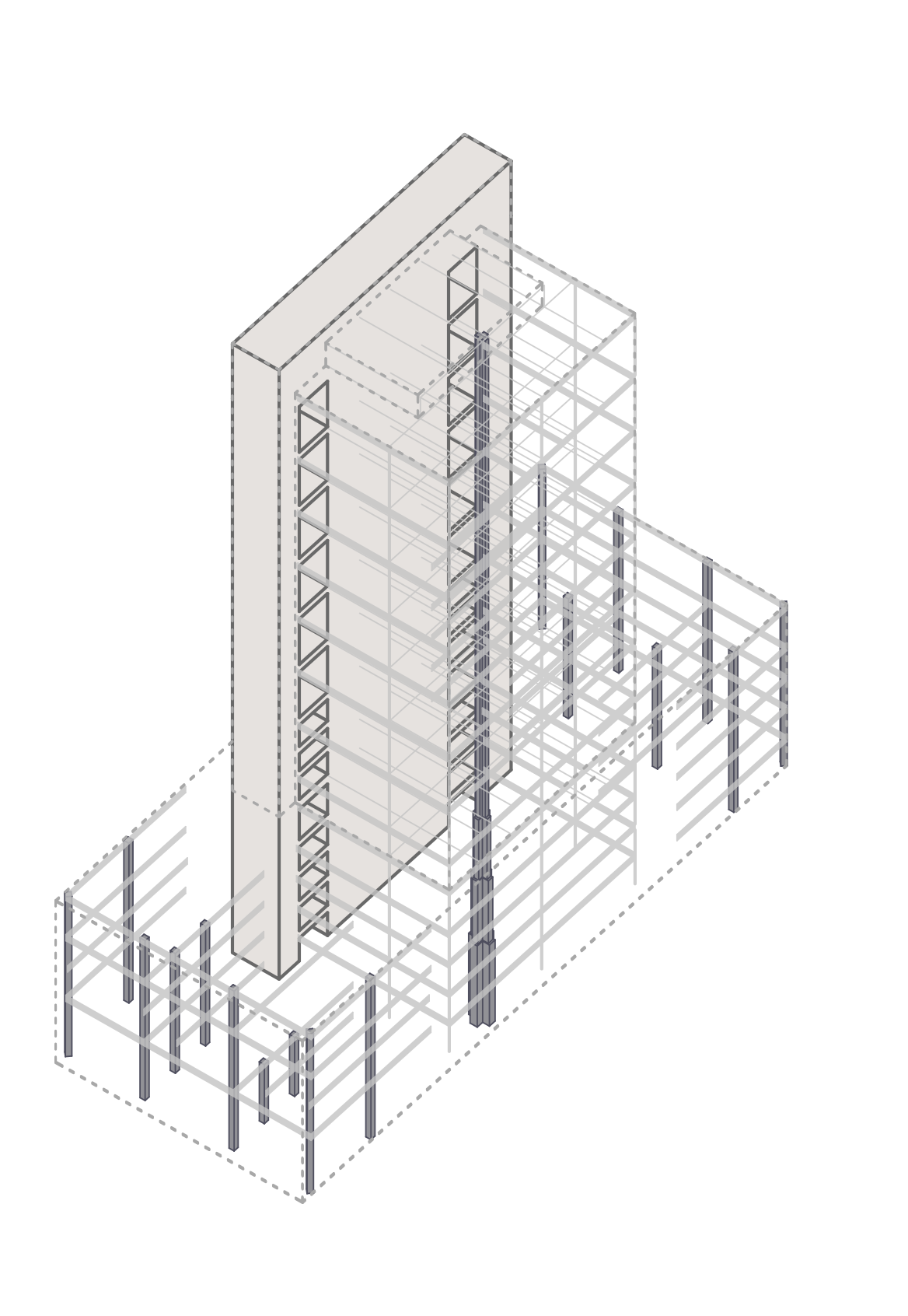 Construction Stages of the Building: Stage 3 - Pre-cast structural frames
 -
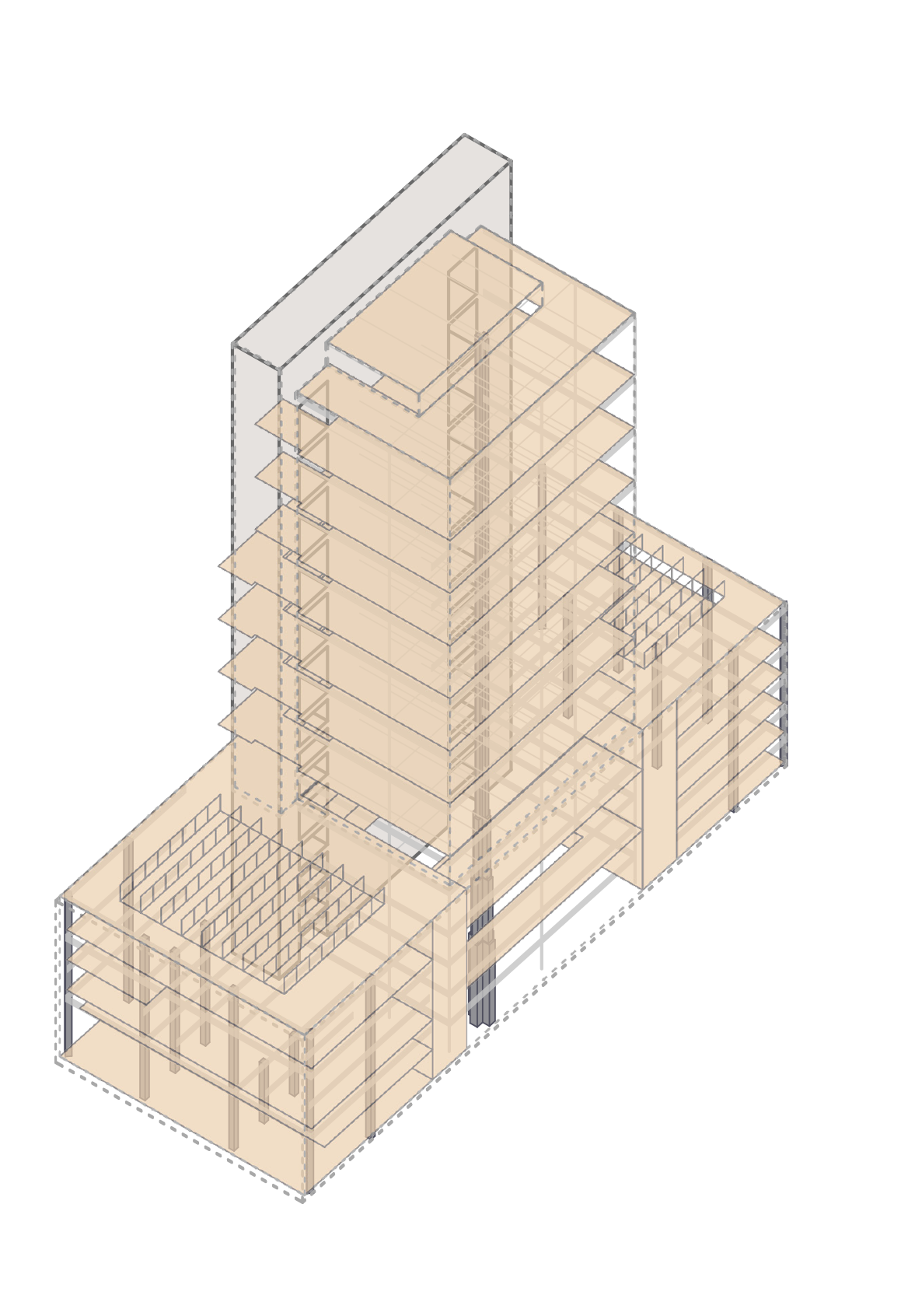 Construction Stages of the Building: Stage 4 - Timber slabs


Project Information
Client: Museum of Contemporary Art
Location: Antwerp, Belgium
Sector: Culture
Commissioned: 2024
Status: Competition Entry
GIA: approx. 10,875sqm
Team
Collaborators: Studio Nauta, Pieter Bedaux, Inside Outside, Hans Ibelings, Bureau Bouwtechniek, NEY+Partners, Arcadis
Selected Press
7 May 2024, Richard Waite, ‘Brits dominate shortlist for £110m Antwerp art museum job‘, Architects’ Journal
Related Projects